What happens in a community problem-solving meeting
Participatory Learning and Action is what happens when academics get their hands on a very simple idea.
So what is it?
Participatory Learning and Action for Maternal and Newborn Health (PLA-MNH) is a community meeting method that brings people together to find and fix the real reasons mothers and babies don't get care in time. It sounds complicated, but it is really just problem-solving that starts by asking communities about their lived experiences.
How does it work?
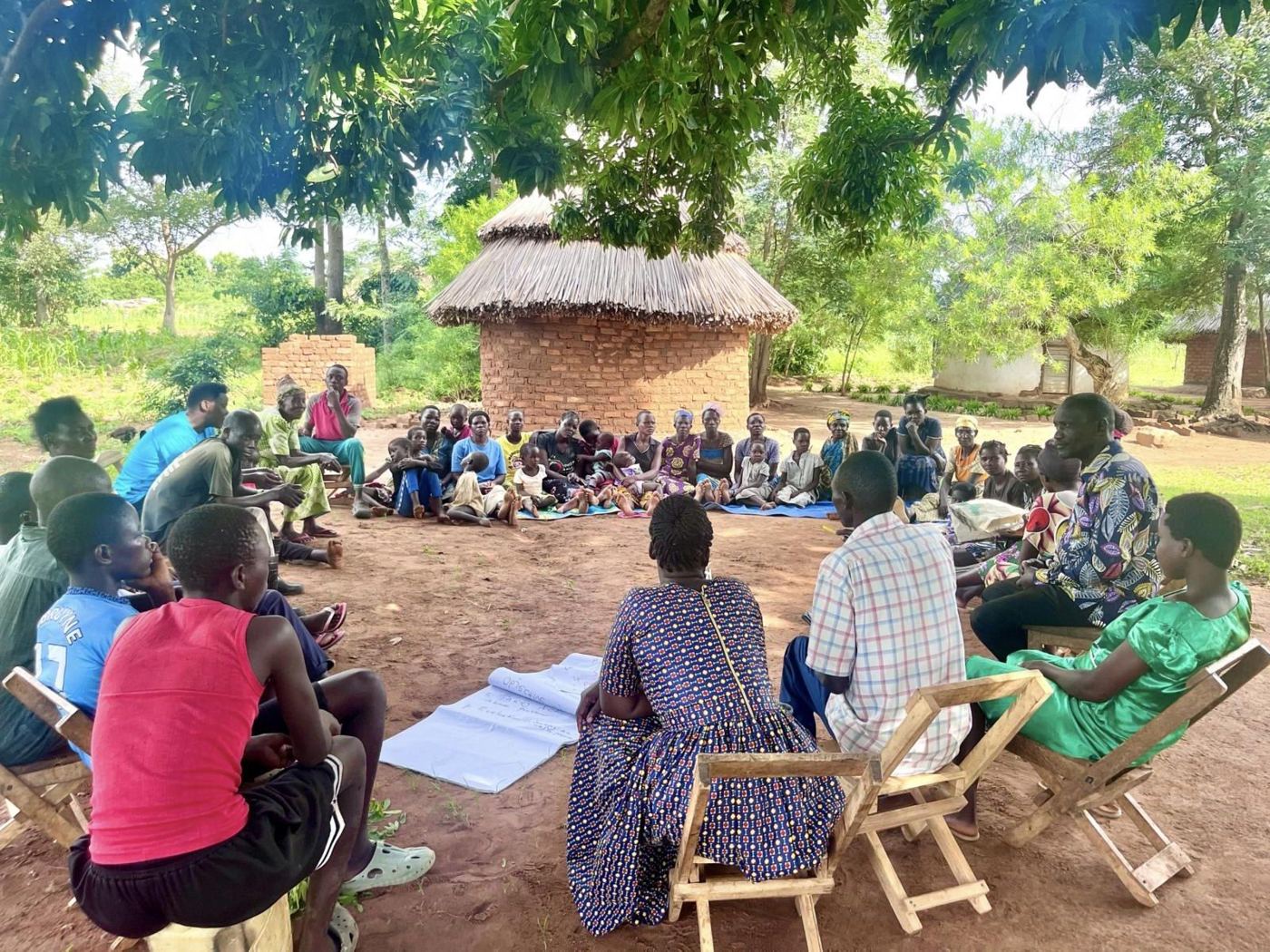
Community health talks are often one-way. Community health workers tell people what they need to know, or should do, to change their behavior. PLA has the same goal but starts from the belief that communities are best placed to identify their barriers to care, and the strategies to solve them.
A trained facilitator guides community members through a cycle of meetings: identifying local barriers to care, designing solutions and taking action. No outside prescriptions. The community owns the problem and the answer. In our program, the facilitator is a government Community Health Extension Worker (CHEW) whom our team has trained in the method. See the action cycle.
Why use it?
Most maternal and newborn deaths are preventable. Women often know care is available but don't reach it in time. Information campaigns alone don't change that. Collective action does. The method is recommended by WHO and has been tested in 7 trials.
What are we here to find out?
The method has strong global evidence. What is less tested is whether it can fully integrate into government health systems, and what happens when it does. We are asking:
- Does it strengthen community health delivery beyond maternal health?
- Does it clear the cost-effectiveness bar of at least 8 times a direct cash transfer?
- Can it become a standard part of how Uganda's CHEWs serve their communities, with lessons for other countries?